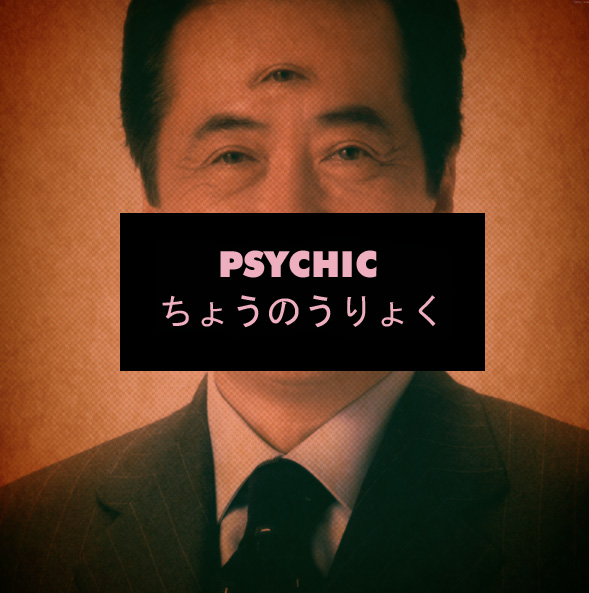
On the Psychic Abilities of Japanese Salarymen

The first thing you’ll do at a new job in Japan is sit for weeks without instructions.

You will show up to work and sit at a desk. You’ll have lunch around 12:30, then sit at your desk. Your supervisors will ask how you are and if everything is going OK. You’ll say you don’t have anything to do, really. They’ll say relax, don’t worry, don’t try to do everything at once, etc. Weeks will pass. Maybe months.

Then you’ll be told to do something impossible in 40 minutes with no preparation.

This happens because Japanese people can read minds. Sometimes they forget that you can’t.
Continue reading

Posted in Culture Shock, Weird | 14 Comments

J-Cin Sundays: “Linda Linda Linda”(リンダリンダリンダ)

J-Cin is a new, semi-regular weekend feature for This Japanese Life discussing Japanese Cinema. This is the first installment.

Continue reading

Posted in Movies | Tagged , , , | 5 Comments

On Japanese Funerals

My first conversation about the earthquake was a week and three days after it struck. In the office, we talked about the peripheries of disaster: Blood donations, fundraisers, TV coverage.

We didn’t talk about victims. When the media focused on pictures of widows and orphans, my colleagues bristled at the invasion of privacy. “Get the cameras out of the shelters,” a co-worker complained.

Mourning comes slowly in Japan. People address tragedy by consensus.

Continue reading

Posted in Earthquake, Photography, Shinto, Shrines, Temples and Ruins, Thinking, Tradition, Uncategorized, Zen | Tagged , , , , , , | 9 Comments

On Watching the News in Japan

Watching the Western media explain Japan can feel like watching a caveman explain the future.

Continue reading

Posted in Earthquake, Tradition, Uncategorized | 21 Comments

After Disaster, Laundry.

This is a Japanese poster urging people to conserve electricity after the 2011 earthquake.

This is a Japanese poster urging people to conserve electricity after the 2011 earthquake.

I went to work today. Normally that wouldn’t merit a blog post, but in a country with nuclear emergencies, multiple earthquakes, rolling power outages and an active volcano, the normal stuff starts to get noteworthy.

As I write this, rescue squads have barely even started the work ahead of them. Grim scenes told by numbers: 700 bodies found in an incoming tide. 2,300 missing. Estimates of 10,000 dead. 457,000 in evacuation shelters. Numbers this size and beyond are unfathomable.

And yet, we see scenes on NHK: A Sake brewer wanders around the wreckage of his brewery. “I just hope that someday, I can brew sake again.”

In Tokyo, where trains are running on a slower schedule to accommodate scheduled blackouts, workers “returned to work as usual” on Monday morning, which strikes some people as slightly insane. Government officials are in the office, even if their own families are missing or dead.

Why is Japan going back to work?

Continue reading

Posted in Earthquake, Tradition, Uncategorized | 31 Comments

Explaining Fukushima to a 12-year-old

Nuclear Power Plant Explodes

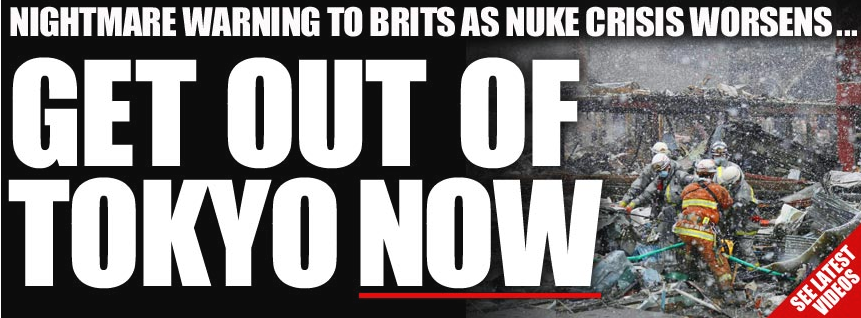
As of 12:41 a.m. JPT Saturday, a nuclear power plant had exploded, though there wasn’t a “meltdown.” As of Sunday, there was a second nuclear power plant with reactor problems, also in Fukushima.

Ninety people who hadn’t fled from the rapidly expanding evacuation zone were hospitalized with radiation sickness. Closer to the plant, the radiation exposure collected in a day was equal to typical radiation exposure over the course of a year.

If you want an explanation in technical terms of what happened to the Fukushima Nuclear reactor you can read one here, or a more reassuring one here.

But if you want the process explained as if you were 12 years old, you are in luck. My grandfather designed nuclear power plants in Japan. As a child of the cold war, I had a terrible fear of anything nuclear and I would often probe him about nuclear meltdowns.

Continue reading

Posted in Earthquake, Video | 4 Comments